Al.ta Cucina
What this was, in short.
Joined as founding designer. Twelve months in I was running product for a team of 8. Built a three-sided creator economy, and shipped a fine-tuned GPT-3 powering two AI features in 2022. Well before LLMs were everywhere.
- 01
Two AI features on one fine-tuned GPT-3
Nonna Maria — a prompt-chained conversational assistant — plus AI-assisted authoring that turned raw text into standardised steps and ingredients across 40k+ recipes. One fine-tuned GPT-3, shipped 2022.
- 02
Recipe Badges sponsorship economy
Pay-per-view sponsorship system with a creator earnings dashboard. Powered 35+ challenges — 6 brand-sponsored — from one templated component system.
- 03
Founding designer to product lead
Solo to a team of 8 in 12 months. Rebuilt the delivery pipeline with the CTO so we shipped weekly drops instead of monthly.
€300k
Brand sponsorship revenue
+180%
User growth in peak year
120K+
Total app downloads
4.8
App Store rating
His creativity and productivity brought innovative ideas and efficient project completion. His problem-solving skills and passion for design and tech were invaluable.
1.5 million followers. Zero revenue.
Al.ta Cucina was Italy's biggest cooking community on Instagram: 1.5M followers, thousands of recipes shared daily. All of it living on someone else's platform.
I joined as founding designer to help build their first app. Twelve months in, I was running product for a team of 8.
The real problem
95% of users consumed recipes and never created. The 5% who did weren't earning anything. Brands wanted in and had no way through. So: monetise the platform, give the silent 95% a reason to post, grow beyond Instagram.
The number that proved the strategy: creators retained 67% at month five. Everyone else, 2.6%.
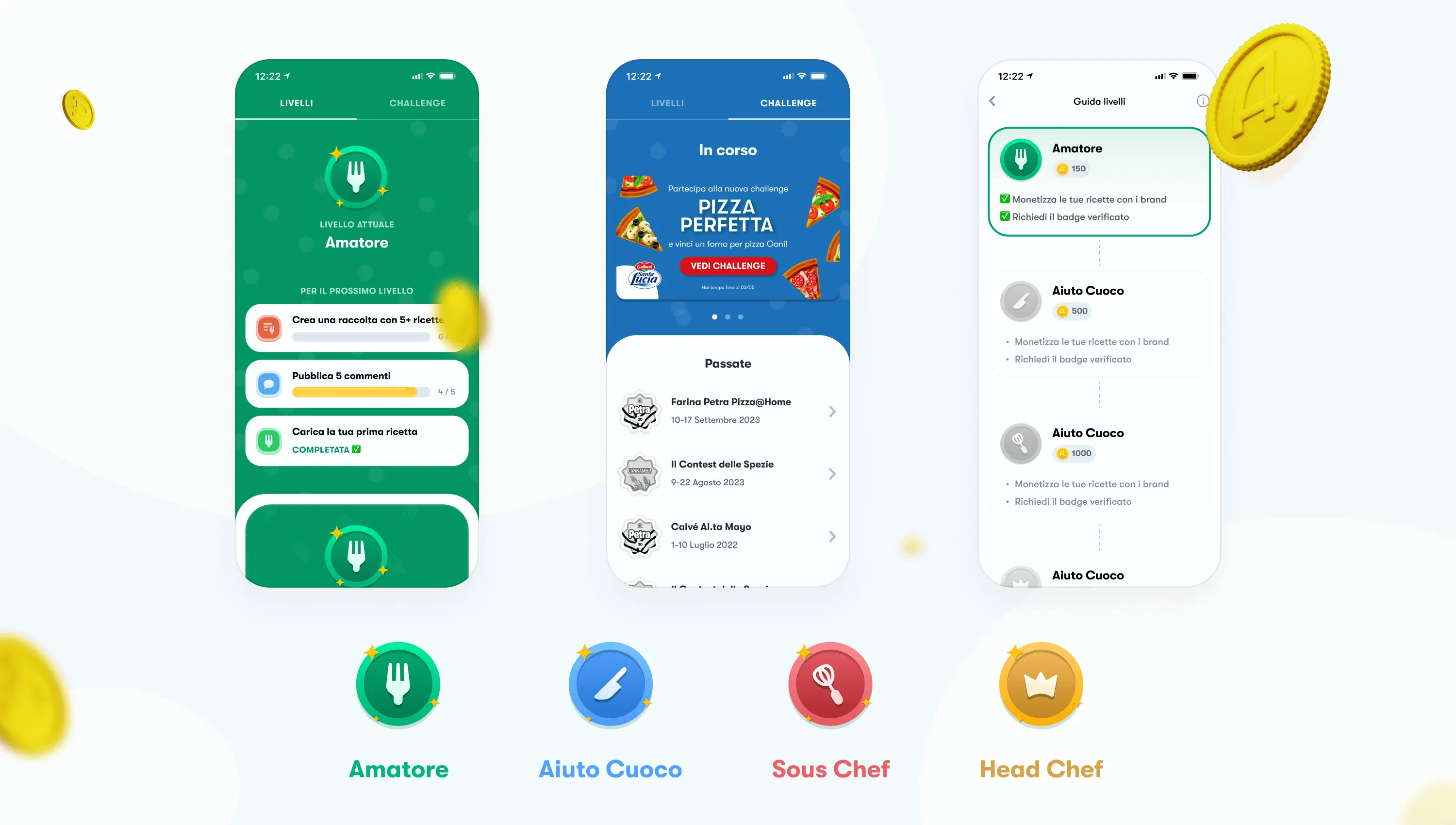
Recipe Challenges
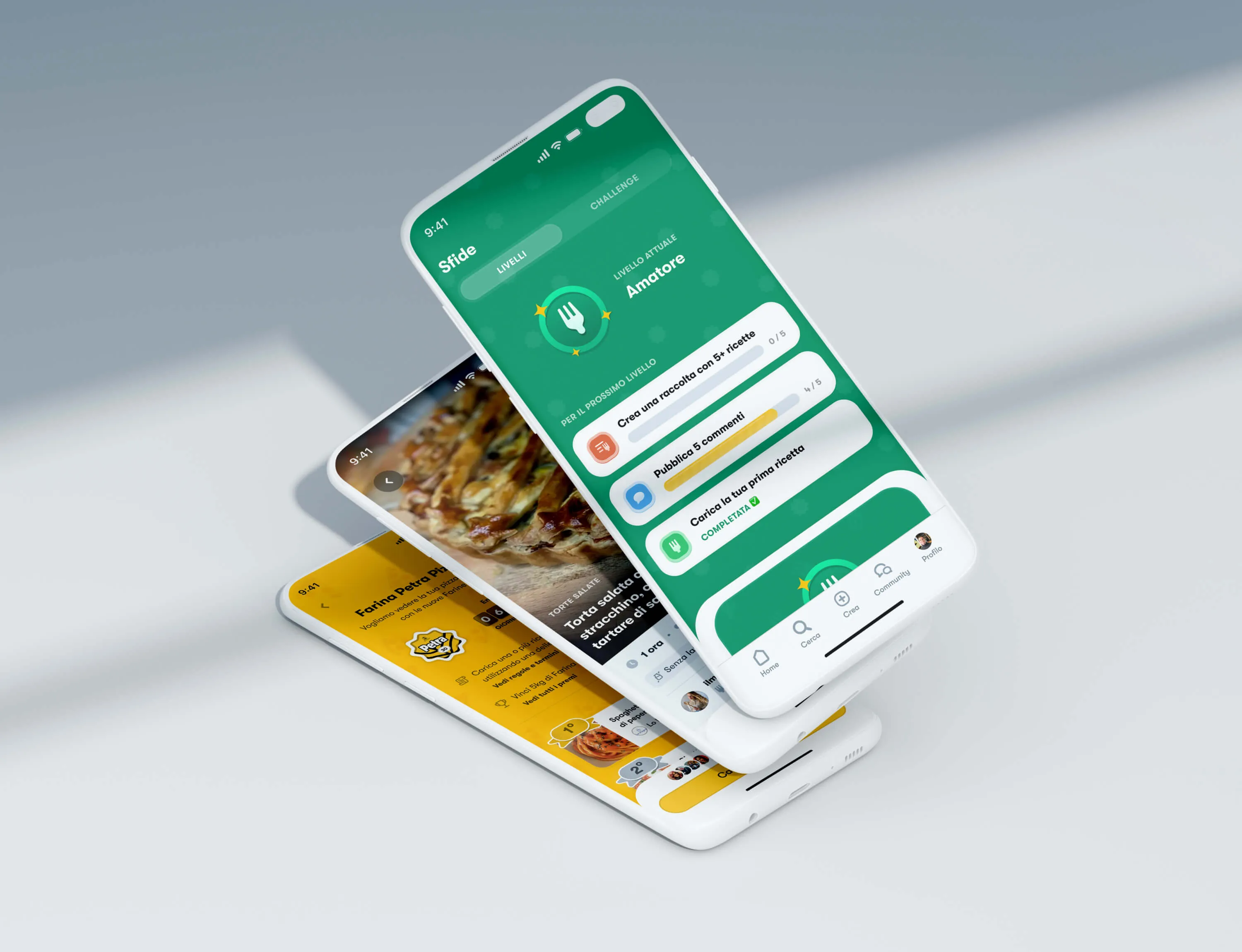
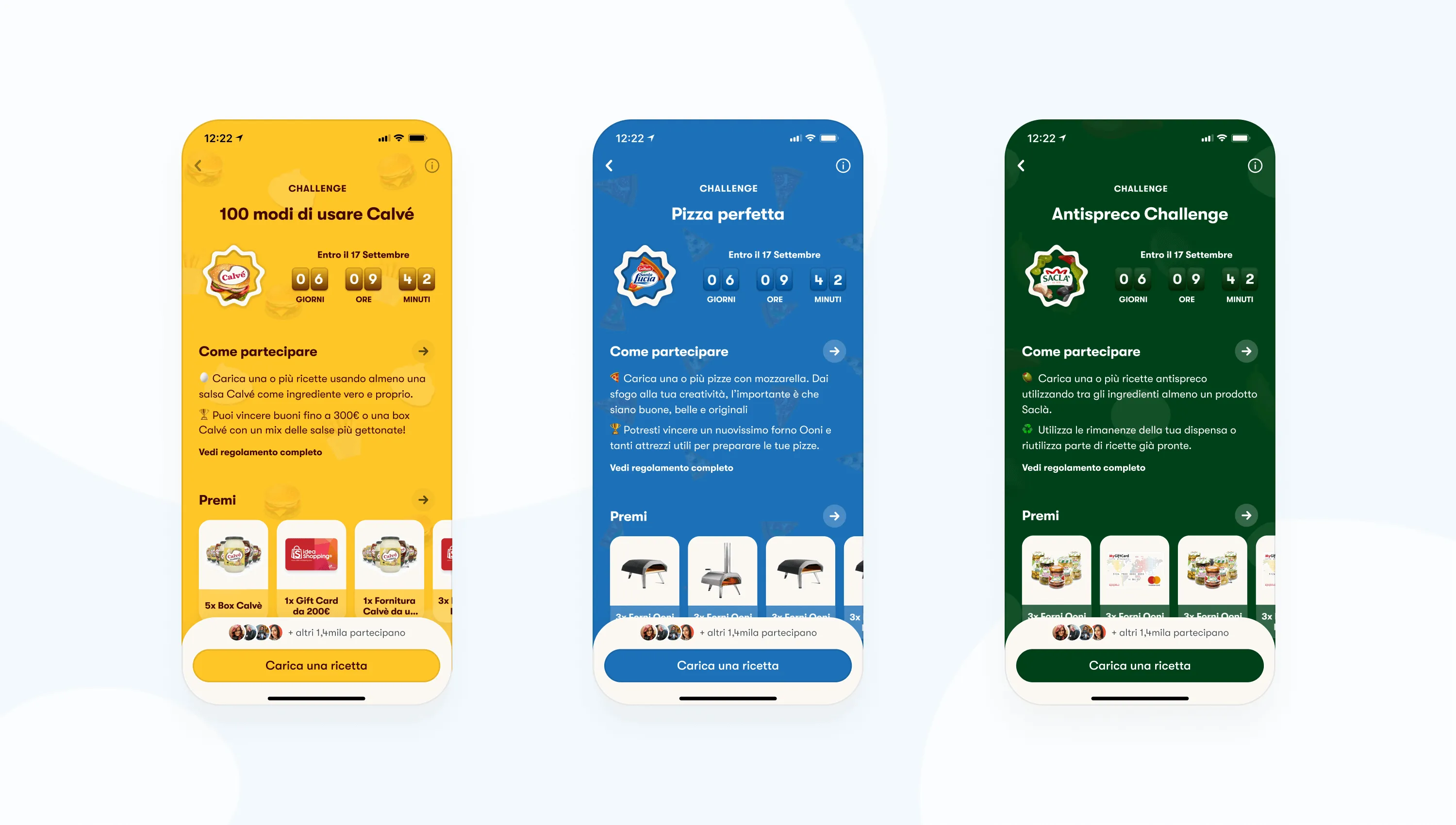
The engagement problem wasn't content — it was motivation, so I turned posting into branded competitions creators could win.
Each challenge was templated — countdowns, recipe cards, reward cards, CTAs — so we could launch 35+ without redesigning each one.
Social voting drove the growth loop: a recipe needed votes to win, so creators shared their entries on Instagram and their followers downloaded the app to vote. Some of those voters became creators themselves, bringing their own followers next time. During challenge months, new creators went from ~150 to ~1,500 a month, and the challenges collected 3,000+ entries in their first five months — enough to make the national trade press.
Recipe Badges
Monetisation had to pay three sides at once — brands, creators, and users — without showing anyone an ad.
Brands wanted awareness. Creators wanted income. Users wanted good recipes.
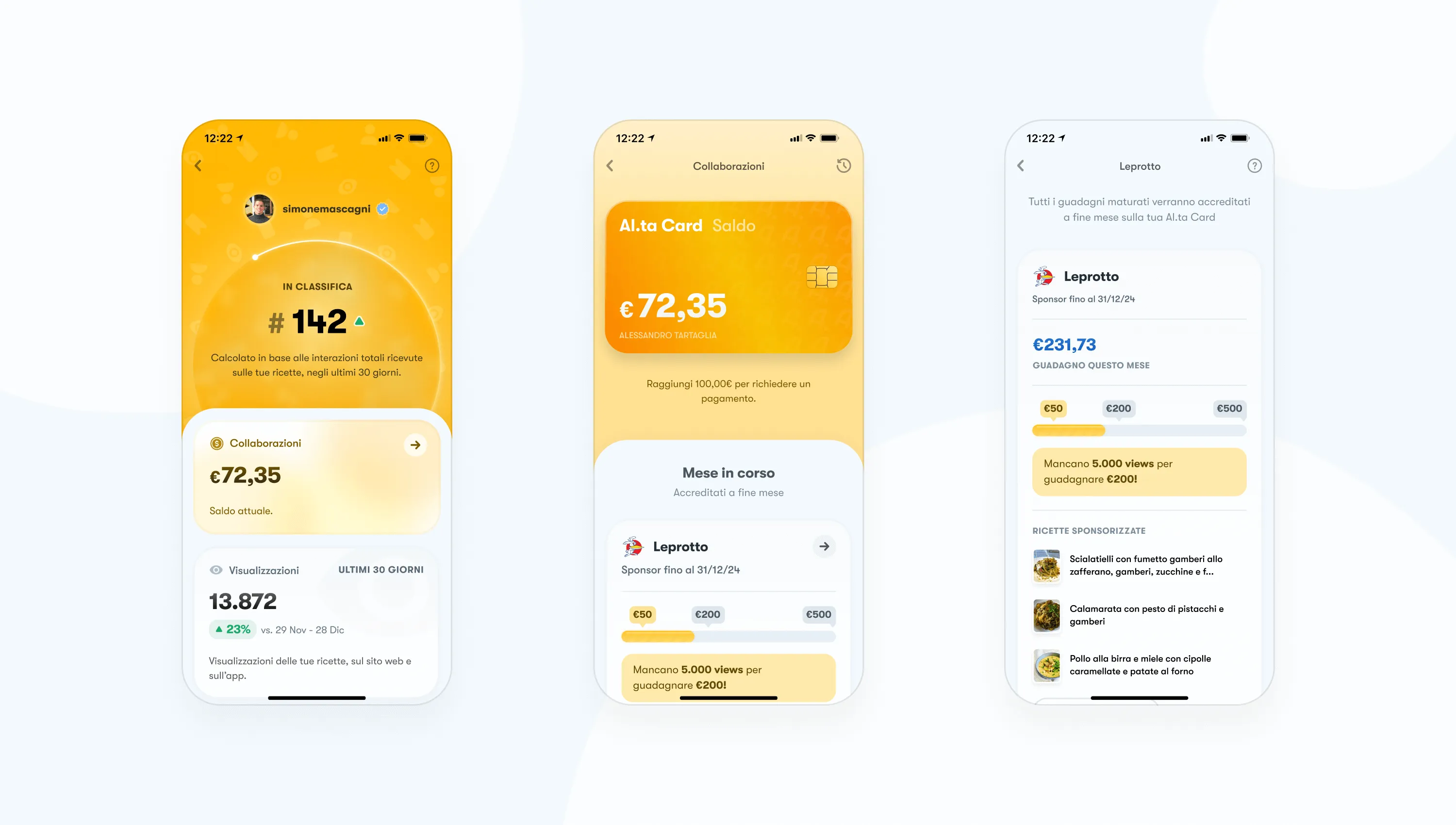
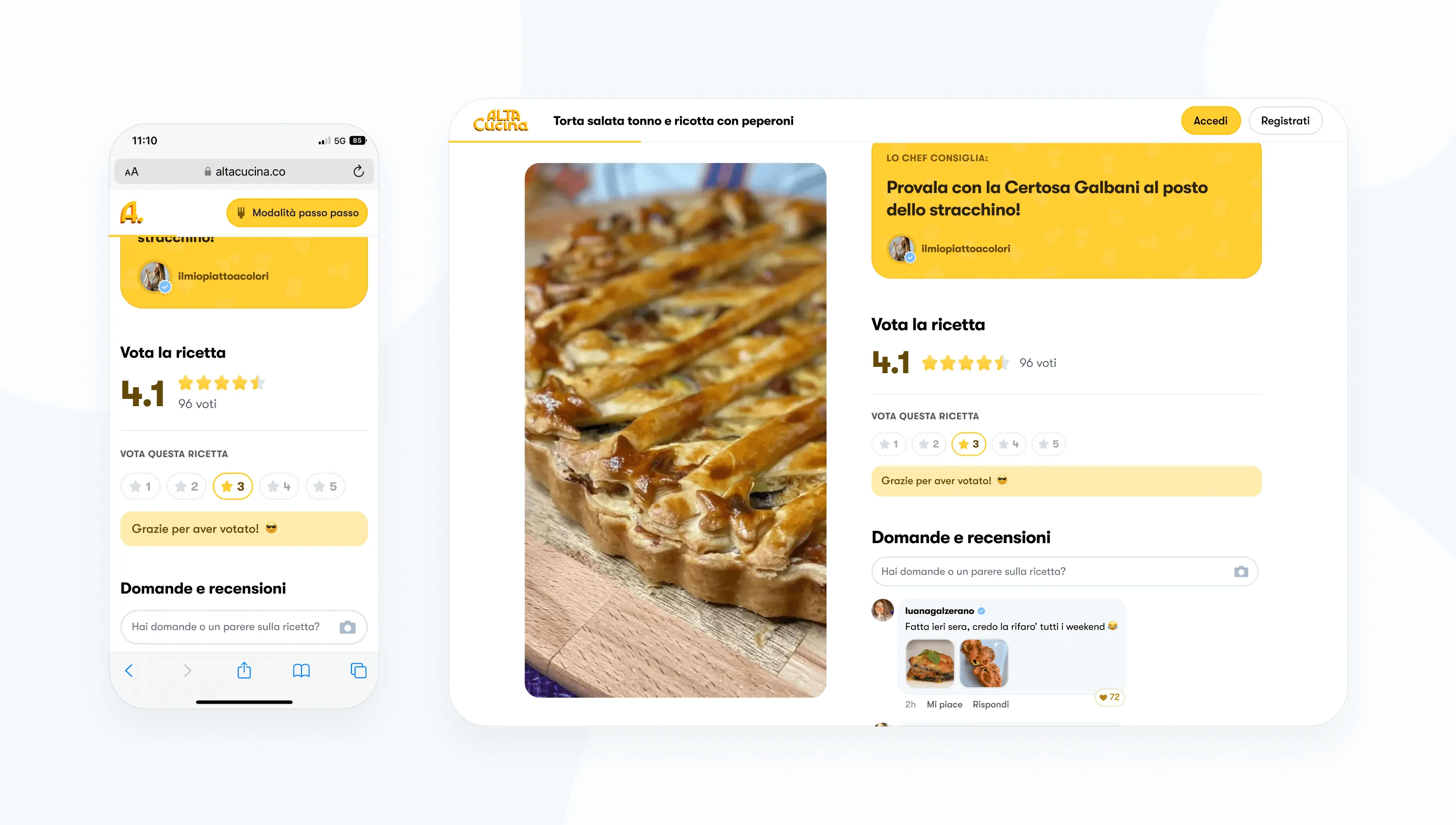
I designed Recipe Badges, a pay-per-view sponsorship system. Brands pay per recipe view against a capped monthly budget, creators earn based on traffic, users see a native ingredient recommendation instead of an ad. The Al.ta Card dashboard shows creators their real-time earnings and sponsored recipe performance.
Top creators ended up earning up to €500/month by stacking sponsor tiers — €20k+ paid out to creators all-time — and the top-creator base doubled in our peak year.
- Gives
- Capped monthly budget
- Gets
- Native ingredient placement
- Gives
- Sponsored recipes
- Gets
- Per-view earnings
- Gives
- Attention
- Gets
- Free, useful recipes
One model, two features
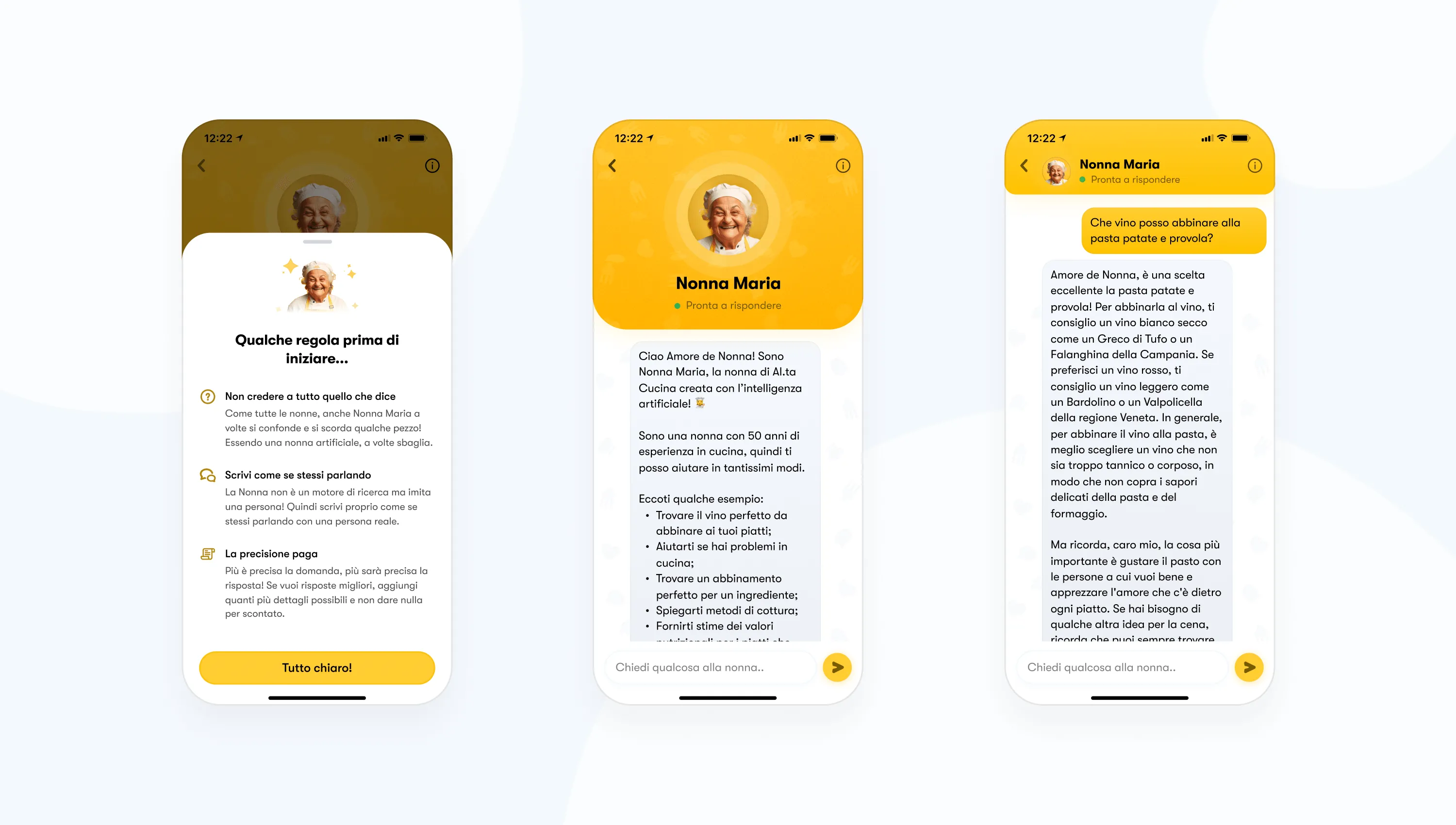
One fine-tuned GPT-3, two very different jobs — a conversational "digital Nonna" and AI-assisted recipe authoring. In 2022, well before LLMs were everywhere.
I fine-tuned a GPT-3 base model on Al.ta Cucina's entire recipe library, then used the same model for both.
Nonna Maria ran on top with prompt chains the backend team and I built together: a "digital Nonna" who could answer recipe questions, suggest ingredient substitutions, walk users through techniques in conversational Italian. Onboarding even opened with a "don't believe everything she says" disclaimer — basically hallucination safety in 2022, before that was a recognised pattern.
The Recipe Importer was the bigger bet. With 40,000+ recipes in the library, authoring was slow and inconsistent — and that inconsistency quietly hurt search. The best recipes also already existed: food creators had years of them sitting on their Instagram pages.
So I used AI to automate the authoring itself. Steps used to go in one at a time; I made it so you could paste raw text and it split into clean, evenly-sized steps, consistent across the whole app. Ingredients became standardised and reusable across recipes — which let us add substitutions and even nutrition info — and titles could be optimised for SEO on request.
The full version — paste a social post, get a complete, searchable recipe — was built and ready before I left, though I didn't get to ship it. For a tiny Italian startup in 2022, it was an unusually early, and genuinely useful, application of AI.
Fixing how we shipped
My biggest non-design impact: rebuilding the delivery pipeline with the CTO so design and back-end ran in parallel — monthly drops became weekly.
Features were bouncing between stakeholders, design, and engineering with no clear handoff points. Back-end would start before design was finalised, and front-end would discover problems back-end had already built around.
So I set up an up-front alignment between me, as design lead, and the CTO, then put design and back-end on the same rail, working in parallel against the same spec. By the time front-end picked it up, both sides were already aligned. No more going back.
Engineers stopped rebuilding what design hadn't finalised.
I was the team's only designer for the first stretch, then hired and mentored our second — so design could scale past me, not just through me.
What I learned
Being product lead and founding designer taught me to pick battles. You can't polish everything when you're also setting the roadmap.
Nonna Maria shipped because I convinced the CTO it was worth the backend investment, and that's a conversation I couldn't have had without product authority.
The habit that stuck with me: fixing how a team works together ships more, over time, than any single feature ever could.
More Work
Flow DS
AI Design Pipeline
Toggl Work